
Answer the recall question in minutes instead of weeks
A traceability system records what went into every unit you made — materials, lots, machine settings, test results, operators — and where every unit went. It removes the nightmare scenario of a quality escape with no way to scope it, where the absence of records turns a 200-unit problem into a full recall.
Willowark builds traceability into the flow of production rather than beside it: scans and captures happen at stations where work already occurs, enforced by the system — a station will not advance with an unscanned component — so the genealogy record is a byproduct of running the line, not a parallel paperwork exercise.
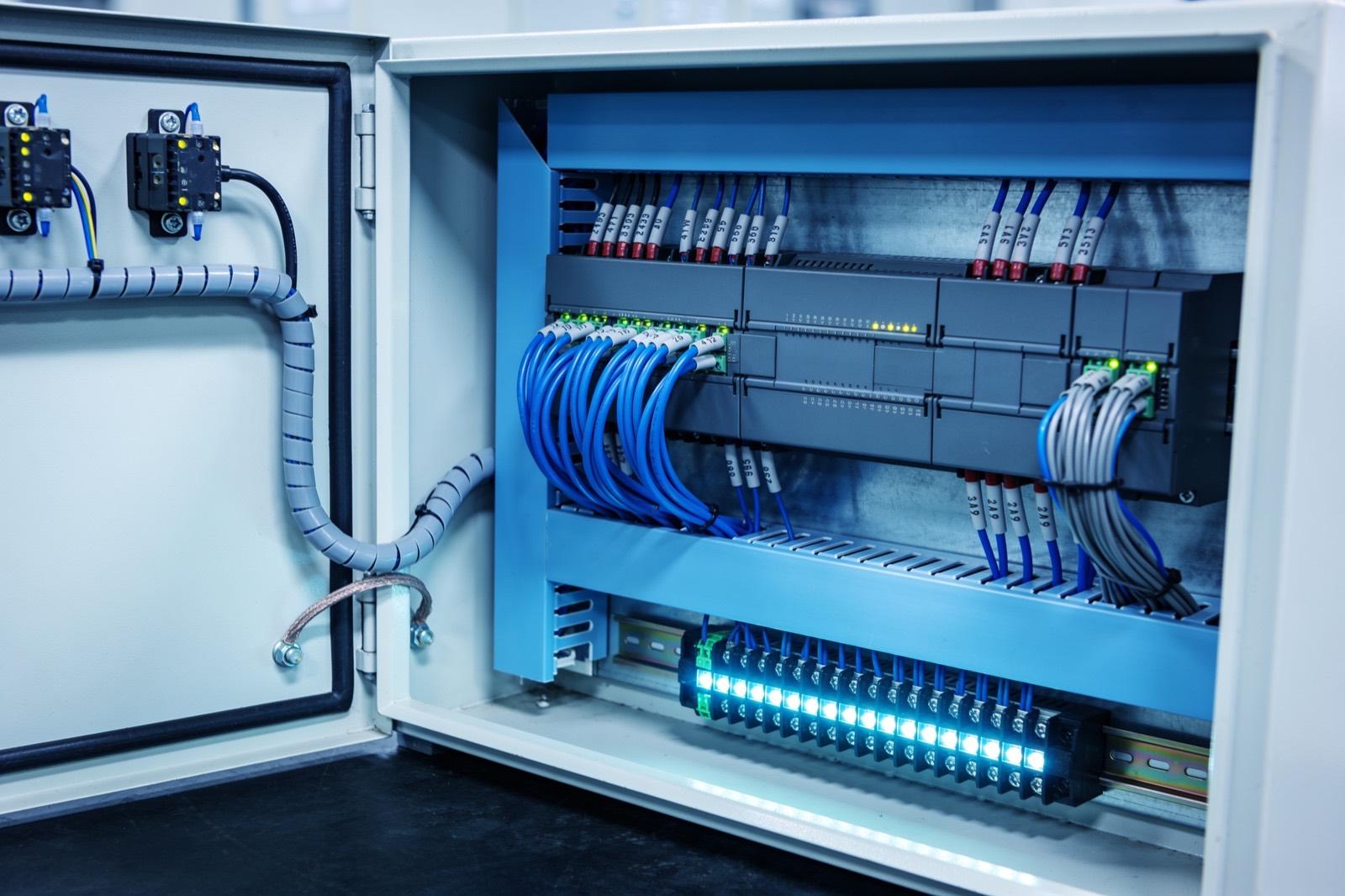 Industrial Automation
How the work gets done
The same way every time: scope, build, hand over.
The build involves identification — barcode, Data Matrix, RFID, or direct part marking with laser or dot peen — scan points wired into station logic, label printing under revision control, and a genealogy database linking serials to component lots, process parameters, and inspection results. Integration matters at both ends: receiving ties supplier lots into the chain, and shipping ties serials to customers. For regulated environments — FDA, automotive IATF, aerospace — we design the records to match the standard you answer to, including electronic signature and audit trail requirements where they apply.
The proof is a drill: pick a component lot at random and ask the system for every affected serial and where each one is — the answer should take minutes and be complete. Day to day, traceability also pays off in quieter ways: wrong-component assembly gets blocked at the station, and quality engineers correlate defects to lots and settings instead of guessing.
Scoping maps the flow of material and units through your plant — receiving, kitting, every station, rework, packing, shipment — and marks each point where identity can be lost or changed. We walk it with operators and quality staff and ask at every step what would need to be recorded to answer a recall question from here. That map decides where marks are applied, where scans are required, and what gets captured automatically from equipment versus entered by a person. It also exposes the awkward cases early: bulk components with no lot separation, subassemblies from a sister plant, rework loops that break the chain.
The common failure is a chain broken quietly: a station bypassed under pressure, a label reprinted without a record, a supplier lot received without scanning. We design against these with enforcement in station logic, controlled label printing that logs every print, and receiving that will not book material without a lot. Scan hardware is selected for the marking and the environment — a code that reads well in a lab may fail on oily or curved parts — and read rates are verified before go-live. Handover includes the data model, station procedures, label templates under revision control, and training for quality staff on running a scope query themselves.
Scope it in writing
What we agree before work starts
- Traceability architecture from receiving through shipment
- Marking, scanning, and label control implementation
Build with checkpoints
Working results, not slide decks
- Genealogy database with lot and serial linkage
- Station enforcement logic: no scan, no advance
Hand over something you own
Documentation, source, and training
- Recall drill demonstrating scope-in-minutes retrieval
- Label templates, station work instructions, and traceability data model documentation
Sound familiar?
Where traceability systems earns its keep.
A supplier notifies you of a bad lot and scoping it takes three weeks of paper
A customer mandate for unit-level traceability with a deadline
Two similar connectors that keep getting swapped at assembly
An audit finding for incomplete device history records
Ask about Traceability Systems
Describe the problem. Get a straight answer.
One line is enough. An engineer replies within a business day.
Related work
Radar centering system for steel mills
Components:
- Radar sensors (strip position): Non-contact radar reading strip edge position in a hot, dusty, vibrating environment where optical sensors fail.
- Edge controller (signal processing): Turns raw radar returns into a clean lateral offset in real time.
- Mill PLC (centering actuators): The mill's existing controller: receives the offset and drives the centering actuators.
- Operator HMI (live position): Live strip position for the operator.
Connections:
- Radar sensors to Edge controller (raw returns)
- Edge controller to Mill PLC (offset)
- Edge controller to Operator HMI
A steel-mill systems provider · Steel manufacturing
Radar-based centering system for steel mills
End-to-end engineering of a radar sensing system that measures and centers material on steel mill lines — from equipment assessment through hardware selection, electrical engineering, software, installation, and commissioning.
Read the case study →Common questions
Asked before every traceability systems project.
Lot-level or serial-level traceability — which do we need?
It depends on unit value, risk, and customer or regulatory requirements. Lot-level is cheaper and often sufficient for process industries; serial-level is warranted when a single failing unit matters — medical devices, safety components, high-value assemblies. Many plants mix both: serialized finished goods with lot-tracked components.
Will scanning slow down our production line?
Not if it is engineered in. Fixed scanners read codes in milliseconds as parts pass, and handheld scans get placed where operators already pause. When a scan point genuinely adds time, we weigh it openly — usually the enforcement it buys prevents far more time in rework and containment.
Can this integrate with our existing ERP?
Yes — ERP typically remains the system of record for materials and orders, while the traceability layer captures the fine-grained genealogy ERP was never designed for. We exchange lot receipts, orders, and completions through the ERP's API or standard interfaces so the two stay consistent.
Our suppliers' lot labels are inconsistent. How do we handle that?
It is nearly universal, and receiving is where it gets solved. We design receiving to capture whatever identifier the supplier provides — a scanned label, a packing-list lot, or a manually assigned internal lot when nothing usable exists — and assign a consistent internal lot from that point forward. Upstream cleanup, such as asking suppliers for standardized labels, helps over time but is not a prerequisite for a working system.
How is rework handled without breaking the genealogy?
Rework is designed in, not bolted on. Units entering rework keep their serial, and every replaced component is scanned out and the replacement scanned in, so the record reflects what is actually in the unit when it ships. Rework stations get the same enforcement as the main line. It is one of the awkward cases we look for during scoping, because a traceability record that ends at the first rework loop is not complete.

Where this sits
Traceability Systems, inside a industrial automation system.
The lit component is the part of the system this service delivers; the rest is what it has to work with.
Hover or focus a component to see what it is and what it talks to. Arrow keys move between them.
Sensors and machines report into the PLC; the PLC drives the HMI and publishes tags to a historian; the historian feeds dashboards and, where it exists, the MES.
Components:
- Machine (press, cell, line): The equipment itself. Newer machines expose tags; older ones need a sensor or a serial tap.
- Sensors (counts, temps, current): Retrofit sensors where the machine offers nothing: proximity counts, current transformers, temperature.
- PLC (control): The controller: logic, safety, and the tag table everything else reads.
- HMI (operator): Operator screen at the machine.
- Historian (tag store): Time-series store of PLC tags: uptime, counts, faults, cycle times.
- Dashboards (OEE, downtime): Plant TV and office views: OEE, downtime reasons, shift comparison.
- MES / ERP (orders): Work orders down, production counts up.
Connections:
- Sensors to PLC over 4-20mA
- Machine to PLC over EtherNet/IP
- PLC to HMI over EtherNet/IP
- PLC to Historian over OPC-UA
- Historian to Dashboards over REST
- Historian to MES / ERP over REST, both directions
Strategy. Software. Systems.
Have a system that should exist?
Tell us what your operation is doing manually, what isn't connected, or what you're trying to build. We'll tell you plainly whether and how we can help.