
Industrial IoT built for dust, downtime, and a decade of service
Industrial IoT puts sensing and connectivity on equipment and processes that never had it — power draw, vibration, temperature, pressure, presence — and turns those signals into visibility and alerts. It removes the blind spots between big systems: the compressor with no monitoring, the cold room checked twice a day by hand, the leak discovered by the water bill.
Willowark engineers IIoT deployments for the environment they will live in: washdown zones, high-EMI panels, temperature extremes, and networks that IT does not want plant traffic on. We pick industrial-grade sensors, connect them appropriately — 4-20 mA, IO-Link, Modbus, wireless where it truly fits — and design the data path with store-and-forward at every hop.
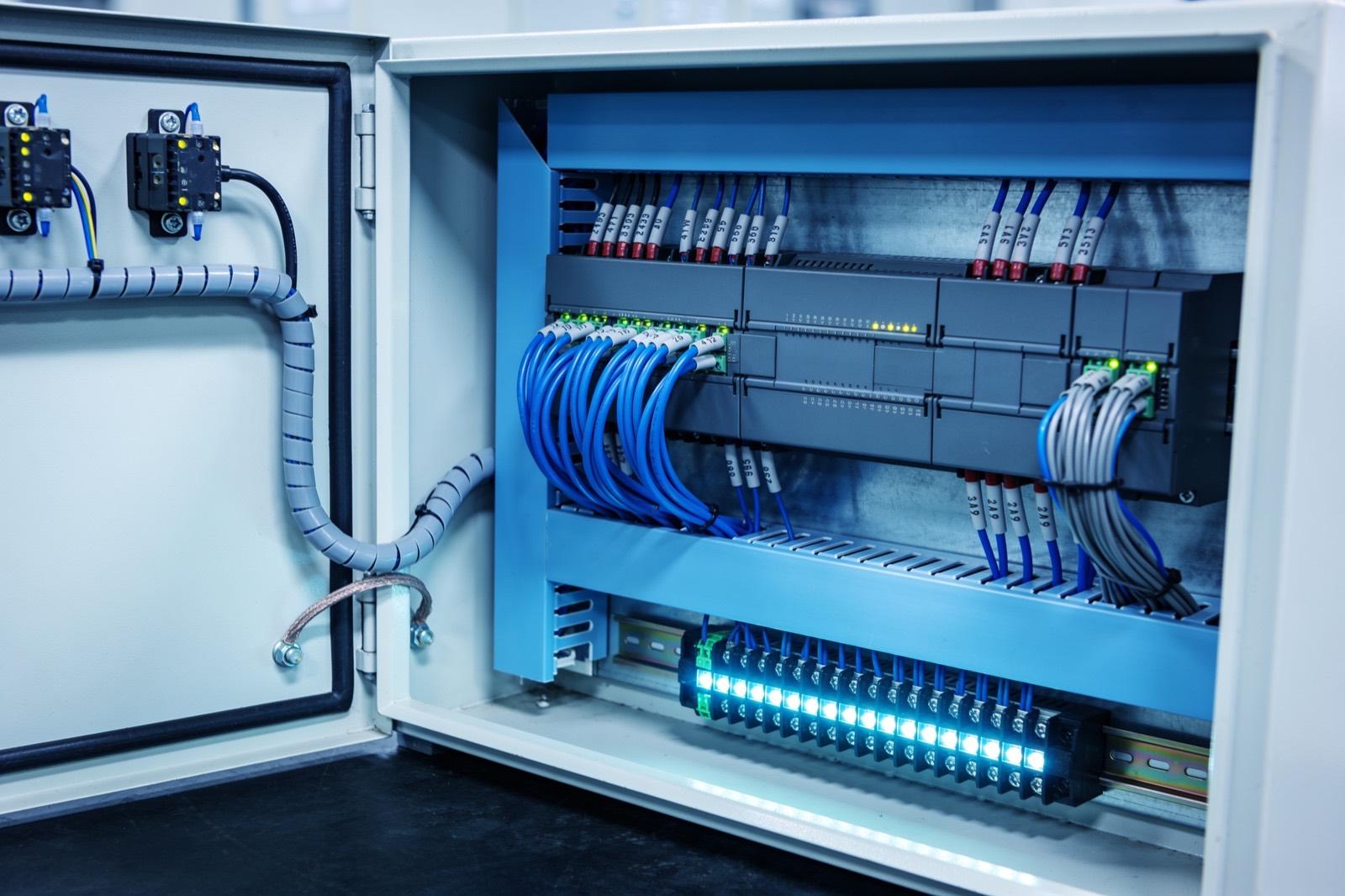 Industrial Automation
How the work gets done
The same way every time: scope, build, hand over.
A build usually involves sensor selection and mounting engineering — where a CT clamp, accelerometer, or RTD actually goes determines data quality more than the analytics do — followed by edge gateways that digitize, filter, and publish over MQTT to a broker, then time-series storage, dashboards, and alerting. Network segmentation matters: we work with your IT team to keep OT traffic on its own VLANs with a defined path out. Power and physical realities get engineered too, from panel space and DIN mounting to PoE or 24 V supply.
In production, the system earns trust through the unglamorous properties: sensors that stay calibrated, gateways that recover from power cuts without a visit, alerts that fire for real conditions and stay silent otherwise. Success gets measured against the original blind spot — the bearing failure that gave two weeks of vibration warning instead of a Saturday breakdown, the energy baseline that finally shows which machine drives the peak-demand charge.
Scoping is a site survey with a clipboard and a meter. We identify the assets behind each blind spot, confirm what power and network are within reach, check panel space and enclosure ratings, and note the environment each sensor will live in — washdown, heat, vibration, EMI from nearby drives. Wireless gets a proper survey rather than a hope, since metal-heavy plants swallow signal in ways a floor plan cannot show. The output is a bill of materials and a mounting plan per point, with a data specification listing rate, range, and alert conditions, so the build can be priced and reviewed before hardware ships.
The failures we design against are predictable: a sensor mounted where it reads the wrong thing, a gateway whose SD card wears out, a wireless link that drops when a forklift parks in the path, and alerts tuned so loose that people stop reading them. We address these with mounting engineering, industrial-grade storage, wired links wherever feasible, and alert thresholds tuned in the first weeks against real conditions. IIoT monitoring never replaces safety instrumentation — a temperature alert is not a high-limit cutout, and we keep that line clear. Handover includes the point list, calibration schedule, gateway backups, and a runbook for replacing any device in the field.
Scope it in writing
What we agree before work starts
- Sensor selection and placement engineering for plant conditions
- Edge gateway deployment with MQTT and store-and-forward
Build with checkpoints
Working results, not slide decks
- OT network design coordinated with IT: VLANs and firewall rules
- Time-series storage, dashboards, and alert thresholds
Hand over something you own
Documentation, source, and training
- Documentation covering calibration and maintenance
- Point list with sensor specifications, mounting details, and replacement procedures
Sound familiar?
Where industrial iot earns its keep.
A compressor room nobody looks at until a bearing lets go
Freezer temperature logs kept on a clipboard for the auditor
A demand charge that spikes monthly with no record of which machines caused it
Ten remote tanks measured by driving to them
Ask about Industrial IoT
Describe the problem. Get a straight answer.
One line is enough. An engineer replies within a business day.
Related work
Radar centering system for steel mills
Components:
- Radar sensors (strip position): Non-contact radar reading strip edge position in a hot, dusty, vibrating environment where optical sensors fail.
- Edge controller (signal processing): Turns raw radar returns into a clean lateral offset in real time.
- Mill PLC (centering actuators): The mill's existing controller: receives the offset and drives the centering actuators.
- Operator HMI (live position): Live strip position for the operator.
Connections:
- Radar sensors to Edge controller (raw returns)
- Edge controller to Mill PLC (offset)
- Edge controller to Operator HMI
A steel-mill systems provider · Steel manufacturing
Radar-based centering system for steel mills
End-to-end engineering of a radar sensing system that measures and centers material on steel mill lines — from equipment assessment through hardware selection, electrical engineering, software, installation, and commissioning.
Read the case study →Common questions
Asked before every industrial iot project.
How is industrial IoT different from consumer or office IoT?
Environment and stakes. Plant-floor devices face vibration, washdown, EMI, and temperature swings that kill consumer hardware, and the data often drives operational decisions rather than convenience. That means industrial-rated sensors, wired power and communications where possible, and failure modes designed instead of discovered.
Do we have to send our plant data to the cloud?
No. Plenty of deployments run entirely on-premises with a local broker, historian, and dashboards. Cloud makes sense for multi-site visibility, remote access, or heavy analytics — and hybrid setups keep control and buffering local while sending summaries up. The architecture follows your constraints, including IT policy.
What does a sensible pilot look like?
One real problem, a handful of sensors, a full data path, and a defined decision at the end. A vibration-and-current setup on your most troublesome machine, running for a quarter, tells you more than a hundred-sensor plan on paper. We design pilots so scaling up is repetition, not redesign.
How long do these sensors and gateways last?
Industrial-rated devices are specified for years of service, but expected life depends on placement and environment — a vibration sensor on a hot gearbox ages faster than a temperature probe in a cold room. We choose components with published ratings for the conditions, avoid consumer hardware entirely, and document a replacement procedure per device, because the question is not whether a sensor will eventually fail but whether replacing it is routine.
Can IIoT data feed our existing SCADA or building management system?
Usually, yes. Most gateways can publish over MQTT and also expose Modbus or OPC UA, so readings can land in an existing SCADA, historian, or building management system alongside a new dashboard. We prefer adding to what you already watch rather than creating a separate screen nobody opens, and we coordinate tag naming with your controls team so the new points fit your conventions.

Where this sits
Industrial IoT, inside a industrial automation system.
The lit component is the part of the system this service delivers; the rest is what it has to work with.
Hover or focus a component to see what it is and what it talks to. Arrow keys move between them.
Sensors and machines report into the PLC; the PLC drives the HMI and publishes tags to a historian; the historian feeds dashboards and, where it exists, the MES.
Components:
- Machine (press, cell, line): The equipment itself. Newer machines expose tags; older ones need a sensor or a serial tap.
- Sensors (counts, temps, current): Retrofit sensors where the machine offers nothing: proximity counts, current transformers, temperature.
- PLC (control): The controller: logic, safety, and the tag table everything else reads.
- HMI (operator): Operator screen at the machine.
- Historian (tag store): Time-series store of PLC tags: uptime, counts, faults, cycle times.
- Dashboards (OEE, downtime): Plant TV and office views: OEE, downtime reasons, shift comparison.
- MES / ERP (orders): Work orders down, production counts up.
Connections:
- Sensors to PLC over 4-20mA
- Machine to PLC over EtherNet/IP
- PLC to HMI over EtherNet/IP
- PLC to Historian over OPC-UA
- Historian to Dashboards over REST
- Historian to MES / ERP over REST, both directions
Strategy. Software. Systems.
Have a system that should exist?
Tell us what your operation is doing manually, what isn't connected, or what you're trying to build. We'll tell you plainly whether and how we can help.