
Measurement chains built end to end, from transducer to dashboard
A smart sensor system is a complete measurement chain: transducer, signal conditioning, local compute, and connectivity, engineered together. It removes the most common failure in monitoring projects — data that technically exists but is too noisy, too raw, or too infrequent to act on.
Willowark starts at the analog front end, because no amount of software rescues a badly conditioned signal. Then we push computation to the edge, so the network carries features and events — the numbers your decisions need — instead of firehoses of raw samples.
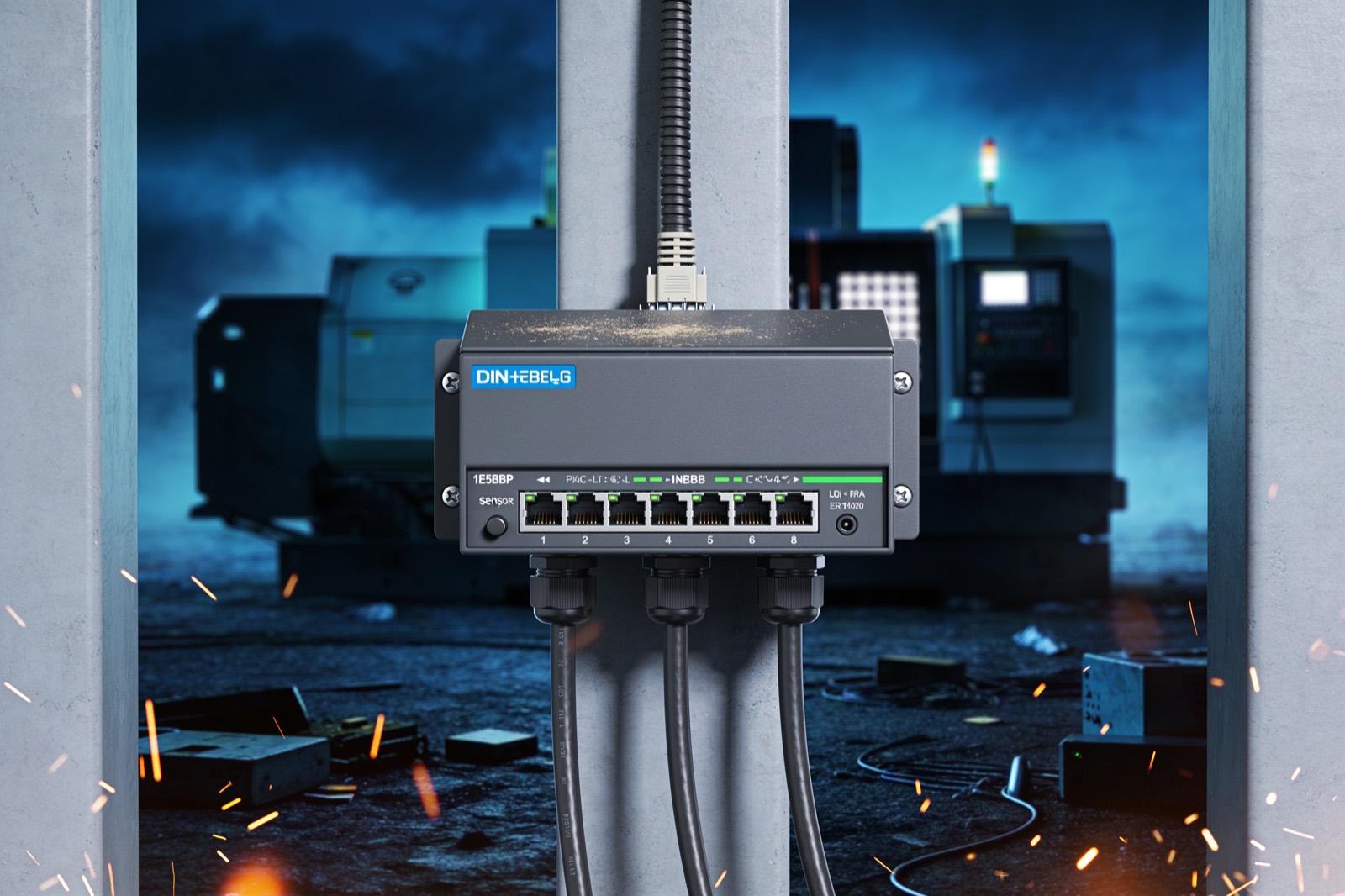 IoT & Smart Systems
How the work gets done
The same way every time: scope, build, hand over.
The analog work is where accuracy is won or lost: RTDs and thermocouples with proper cold-junction compensation, IEPE accelerometers with correct constant-current excitation, strain-gauge bridges with stable excitation and shielding, and 4-20 mA loops for long, noisy runs. ADC selection, sampling rates, and anti-aliasing filters are matched to the physics being measured, and grounding and shielding practice keeps VFD-saturated plants from burying your signal. At the edge, firmware extracts what matters — FFT band energies and RMS trends for vibration, rate-of-change events for temperature and pressure — before anything touches the network.
Connectivity is chosen by power and bandwidth, not fashion: LoRa for battery nodes sending small readings across a large property, cellular where sites are scattered, wired Ethernet or RS-485 where infrastructure exists. In production, the system proves itself through calibration checks that catch drift, battery life that matches the projection, and alert thresholds mapped to actions a person actually takes.
A measurement project usually starts with a few points, not a plant. Instrumenting one motor, one oven, or one structure with commercial transducers and a prototype node answers the questions that decide the design: whether the signal is clean enough at the planned sample rate, whether the features we extract track the failure or condition you care about, and whether the mounting survives the environment. Industrial off-the-shelf sensors and enclosures are the default at this stage and often stay the default; custom conditioning boards get built only when the pilot shows a commercial part cannot do the job. The pilot data sets thresholds for the wider rollout.
Readings and extracted features publish over MQTT or LoRaWAN into a time-series database you control, with the raw waveform retained locally on the node for a configurable window so an engineer can pull the full signal when an event needs a closer look. Nodes keep sampling and buffering when the uplink is down. Over the life of the system, sensors drift and batteries age, so the handover package includes calibration procedures with pass-fail criteria, a replacement schedule for consumables, spare-part lists, and a runbook for the two most common calls: a node that has gone quiet and a reading that has gone suspicious.
Scope it in writing
What we agree before work starts
- Measurement requirements analysis and sensor selection
- Signal conditioning and acquisition hardware design
Build with checkpoints
Working results, not slide decks
- Edge firmware with feature extraction and event detection
- Wireless or wired network design: LoRa, cellular, or wired
Hand over something you own
Documentation, source, and training
- Dashboard and alerting configuration
- Calibration procedures and battery life validation
Sound familiar?
Where smart sensor systems earns its keep.
Vibration monitoring on motors, pumps, and rotating equipment
Multi-point temperature mapping in ovens, storage, and processes
Load and strain monitoring on structures and equipment
Leak, flow, and pressure event detection across a facility
Ask about Smart Sensor Systems
Describe the problem. Get a straight answer.
One line is enough. An engineer replies within a business day.
Related work
Radar centering system for steel mills
Components:
- Radar sensors (strip position): Non-contact radar reading strip edge position in a hot, dusty, vibrating environment where optical sensors fail.
- Edge controller (signal processing): Turns raw radar returns into a clean lateral offset in real time.
- Mill PLC (centering actuators): The mill's existing controller: receives the offset and drives the centering actuators.
- Operator HMI (live position): Live strip position for the operator.
Connections:
- Radar sensors to Edge controller (raw returns)
- Edge controller to Mill PLC (offset)
- Edge controller to Operator HMI
A steel-mill systems provider · Steel manufacturing
Radar-based centering system for steel mills
End-to-end engineering of a radar sensing system that measures and centers material on steel mill lines — from equipment assessment through hardware selection, electrical engineering, software, installation, and commissioning.
Read the case study →Common questions
Asked before every smart sensor systems project.
Should we buy off-the-shelf sensors or build custom?
Off-the-shelf first, wherever one genuinely fits — commercial sensors are cheap and proven. Custom earns its cost when the measurement is unusual, the environment is hostile, the form factor is constrained, or off-the-shelf units force you into a closed platform. Most of our systems mix both: commercial transducers, custom conditioning and edge intelligence.
What battery life can wireless sensor nodes realistically achieve?
Years, when designed for it: microcontrollers sleeping in microamps, radios like LoRa that spend milliseconds transmitting, and duty cycles matched to how fast the measured quantity actually changes. We publish a power budget during design and verify it on the bench, so the battery-life number you plan around is measured rather than hoped.
Our plant is full of VFDs and electrical noise. Will sensors work?
Yes, with engineering that respects the environment: differential and current-loop signaling, proper shield grounding, filtering matched to the noise spectrum, and physical separation from power runs. Electrically hostile plants are normal conditions for industrial measurement, not special cases — but they punish designs that ignored them.
How many sensors do we need to start?
Fewer than most people expect. A pilot on a handful of the assets that hurt most when they fail — or the one process variable nobody can currently see — usually tells you more than a blanket deployment, because it forces the question of what you would do with the data. We typically recommend starting with the smallest set that can answer a specific question, proving the measurement, and then expanding along the path the results point to.
Can the data feed our existing historian, CMMS, or analytics tools?
Yes, and it should. The pipeline publishes standard MQTT topics and stores to a conventional time-series database, so historians, maintenance systems, and analytics platforms can subscribe or query directly. Where a target system prefers OPC UA, Modbus, or a REST push, a small connector handles the translation. We deliberately avoid sensor platforms that hold your data in a closed cloud, because the value of a measurement chain usually shows up in the tools your team already uses.


Where this sits
Smart Sensor Systems, inside a iot & smart systems system.
The lit component is the part of the system this service delivers; the rest is what it has to work with.
Hover or focus a component to see what it is and what it talks to. Arrow keys move between them.
Field sensors report through an edge gateway to a broker; a time-series store feeds dashboards, and rules raise alerts that reach a person.
Components:
- Sensors (field): Temperature, vibration, level, current — wired or wireless.
- Edge gateway (DIN rail): Reads the sensors, buffers when the link is down, speaks MQTT upward.
- MQTT broker: Pub/sub hub; many gateways, many consumers.
- Time-series store: Every reading, retained for the trend and the audit.
- Rules engine (thresholds): Thresholds, rates of change, missing-heartbeat detection.
- Dashboard: Live and historical views.
- On-call phone: The alert reaches someone who can act.
Connections:
- Sensors to Edge gateway over Modbus
- Edge gateway to MQTT broker over MQTT
- MQTT broker to Time-series store over MQTT
- MQTT broker to Rules engine over MQTT
- Time-series store to Dashboard over REST
- Rules engine to On-call phone over push
Strategy. Software. Systems.
Have a system that should exist?
Tell us what your operation is doing manually, what isn't connected, or what you're trying to build. We'll tell you plainly whether and how we can help.