
Know what every panel, feeder, and motor is drawing right now
Smart electrical monitoring puts continuous instrumentation on your electrical system: current, voltage, power factor, and power quality on the panels, feeders, and machines that matter. It removes the blind spots that end in surprises — the motor that was degrading for weeks, the phase imbalance quietly cooking a transformer, the panel nobody realized was near capacity.
Willowark designs the monitoring architecture and data systems, and coordinates installation with your licensed electrician. Retrofit-friendly hardware — split-core CTs and Rogowski coils that clamp around existing conductors — means most systems go in without rewiring, and often without a shutdown.
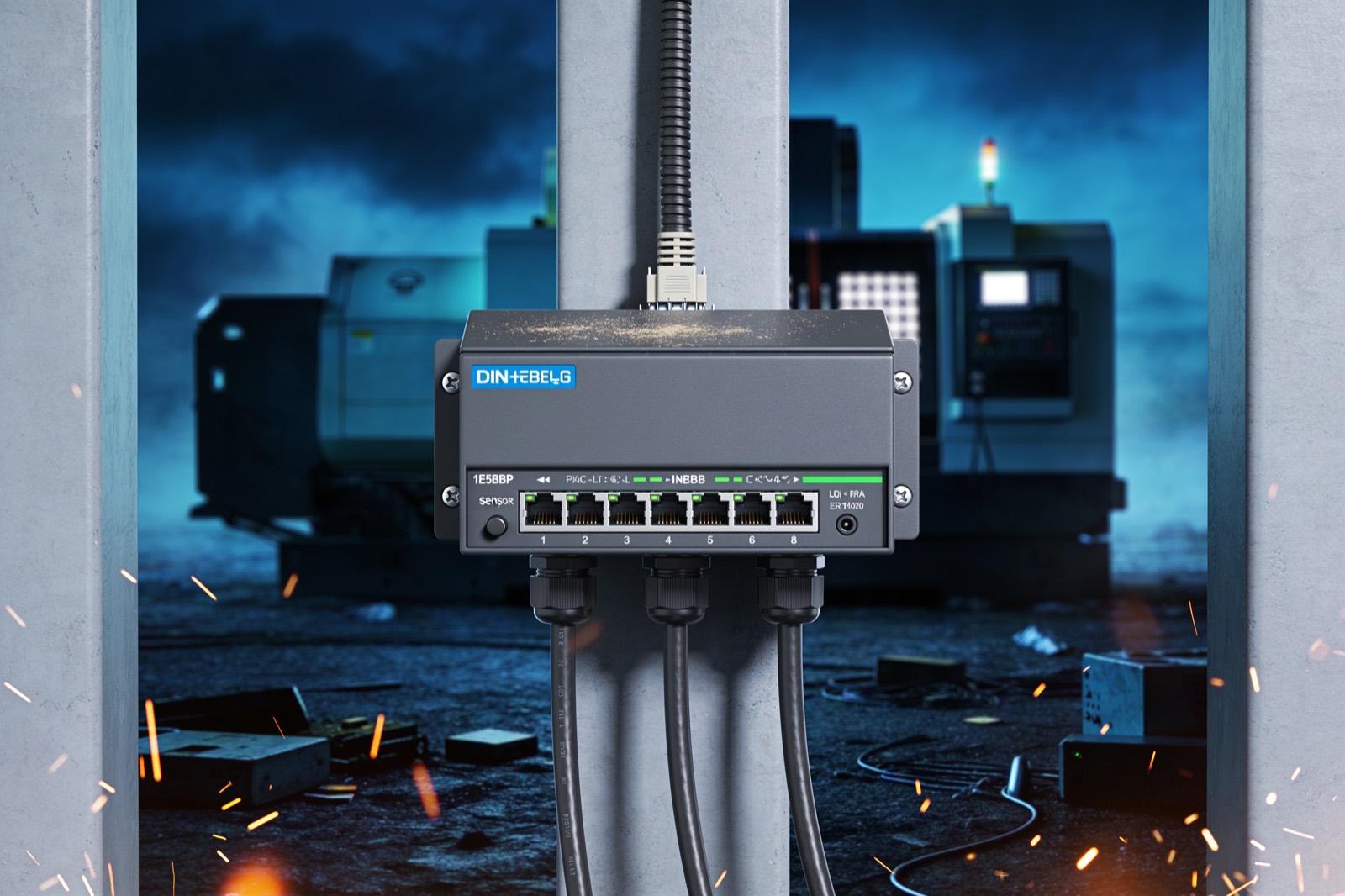 IoT & Smart Systems
How the work gets done
The same way every time: scope, build, hand over.
Hardware selection maps to what each point needs to reveal: split-core CTs for standard feeders, flexible Rogowski coils for large or awkward conductors, and meters graded to purpose — monitoring-class for trending, revenue-class where billing accuracy matters. Meters network over Modbus RTU or TCP into DIN-rail data collectors, capturing per-phase voltage and current, power factor, and harmonic distortion where power quality is in question. Granularity is an economic decision we make with you: mains-level tells you totals, feeder-level tells you departments, circuit-level tells you machines.
The data earns its keep through baselines and alarms: normal draw is learned per load, and deviations — rising current at constant output, phase imbalance, undervoltage events, loads running when they should not be — generate alerts routed to the right person. Motor current signatures are especially valuable, since bearing wear and mechanical binding show up electrically well before failure. Alarms integrate with your maintenance workflow so findings become work orders, not dashboard trivia.
A sensible first phase is a single panel or a short list of critical motors, instrumented with the same meters, collector, and dashboards the full site will use. That proves the installation approach with your electrician, confirms the meters read cleanly through whatever cable routing the panel allows, and produces a few weeks of real load data before committing to the rest. Expansion is then mostly hardware and labor: more CTs, more meters on the same Modbus trunk or a second collector, and new points appearing in dashboards that already exist. Panels with no spare space or awkward conductor access get flagged in the survey, not on install day.
Meter data is yours in a usable form: per-phase readings land in a standard time-series database, publish over MQTT for anything else that wants them, and export to CSV for anyone who prefers a spreadsheet. Nothing is locked inside a meter vendor's portal. The collector keeps logging locally through network outages and backfills when the link returns. At handover we deliver the CT and meter schedule with panel locations and ratios, a wiring and addressing map, dashboard documentation, and a runbook for the maintenance team covering how to verify a reading against a clamp meter and what a failed CT or dead collector looks like on the dashboard.
Scope it in writing
What we agree before work starts
- Monitoring point survey and metering architecture
- Metering hardware specification: CTs, Rogowski coils, and meters
Build with checkpoints
Working results, not slide decks
- Installation drawings coordinated with your electrical contractor
- Data collection and dashboard deployment
Hand over something you own
Documentation, source, and training
- Baseline load profiles with anomaly and threshold alarms
- Maintenance workflow integration and documentation
Sound familiar?
Where smart electrical monitoring earns its keep.
Early warning of motor and pump degradation via current monitoring
Panel load studies before adding new equipment
Detecting equipment left running outside production hours
Phase-loss and imbalance alarms on critical machinery
Ask about Smart Electrical Monitoring
Describe the problem. Get a straight answer.
One line is enough. An engineer replies within a business day.
Related work
Radar centering system for steel mills
Components:
- Radar sensors (strip position): Non-contact radar reading strip edge position in a hot, dusty, vibrating environment where optical sensors fail.
- Edge controller (signal processing): Turns raw radar returns into a clean lateral offset in real time.
- Mill PLC (centering actuators): The mill's existing controller: receives the offset and drives the centering actuators.
- Operator HMI (live position): Live strip position for the operator.
Connections:
- Radar sensors to Edge controller (raw returns)
- Edge controller to Mill PLC (offset)
- Edge controller to Operator HMI
A steel-mill systems provider · Steel manufacturing
Radar-based centering system for steel mills
End-to-end engineering of a radar sensing system that measures and centers material on steel mill lines — from equipment assessment through hardware selection, electrical engineering, software, installation, and commissioning.
Read the case study →Common questions
Asked before every smart electrical monitoring project.
Can monitoring be installed without shutting down production?
Frequently, yes. Split-core CTs and Rogowski coils clamp around conductors without disconnecting them, which is exactly why we favor them for retrofits. Live-panel work is performed by licensed electricians under proper safety procedures, and where a brief shutdown is genuinely required, we plan it around your production schedule.
What accuracy class do the meters need?
It depends on the question you are asking. Trend and anomaly detection works fine with one-percent-class monitoring meters; cost allocation and tenant billing call for revenue-grade metering. Mixing classes across a site is normal and sensible — pay for precision where the decision requires it.
How is this different from energy monitoring?
Electrical monitoring watches the health and behavior of the electrical system — equipment condition, power quality, capacity — while energy monitoring focuses on consumption and cost. They share hardware, and one installation often serves both, but the alarms, dashboards, and audiences differ. We frequently deliver them together.
Can the system tell us a motor is about to fail?
It can show you a motor that is changing, which is usually the useful part. Rising current at the same load, growing imbalance between phases, or new harmonic content are the electrical signatures of bearing wear, misalignment, and winding problems, and they typically appear well ahead of failure. What the system will not do is give you a date. We set the alarms to flag the trend early enough for maintenance to inspect on their schedule rather than the motor's.
Will the monitoring hardware interfere with our existing equipment or protection?
Not when installed correctly. Split-core CTs and Rogowski coils are non-contact — they sense the magnetic field around a conductor and do not break the circuit or load it. Voltage references are taken through fused taps sized for metering, and the meters and collectors mount in the panel or an adjacent enclosure with their own protection. The installation drawings specify all of this so your electrician and any inspector can see exactly what is being added and where.


Where this sits
Smart Electrical Monitoring, inside a iot & smart systems system.
The lit component is the part of the system this service delivers; the rest is what it has to work with.
Hover or focus a component to see what it is and what it talks to. Arrow keys move between them.
Field sensors report through an edge gateway to a broker; a time-series store feeds dashboards, and rules raise alerts that reach a person.
Components:
- Sensors (field): Temperature, vibration, level, current — wired or wireless.
- Edge gateway (DIN rail): Reads the sensors, buffers when the link is down, speaks MQTT upward.
- MQTT broker: Pub/sub hub; many gateways, many consumers.
- Time-series store: Every reading, retained for the trend and the audit.
- Rules engine (thresholds): Thresholds, rates of change, missing-heartbeat detection.
- Dashboard: Live and historical views.
- On-call phone: The alert reaches someone who can act.
Connections:
- Sensors to Edge gateway over Modbus
- Edge gateway to MQTT broker over MQTT
- MQTT broker to Time-series store over MQTT
- MQTT broker to Rules engine over MQTT
- Time-series store to Dashboard over REST
- Rules engine to On-call phone over push
Strategy. Software. Systems.
Have a system that should exist?
Tell us what your operation is doing manually, what isn't connected, or what you're trying to build. We'll tell you plainly whether and how we can help.