
Give the machines you build a voice in the field
Connected equipment means the machines you manufacture report home: health, usage, faults, and consumable status from every unit in the field. For an OEM it removes the blind fleet problem — learning about failures from angry phone calls, flying technicians out to read a fault code, and having no data about how customers actually run your product.
Willowark builds connectivity as a product capability, not a bolt-on: telemetry designed into the machine or retrofitted onto the installed base, a multi-tenant backend where each customer sees their own equipment, and a provisioning process that fits your factory floor.
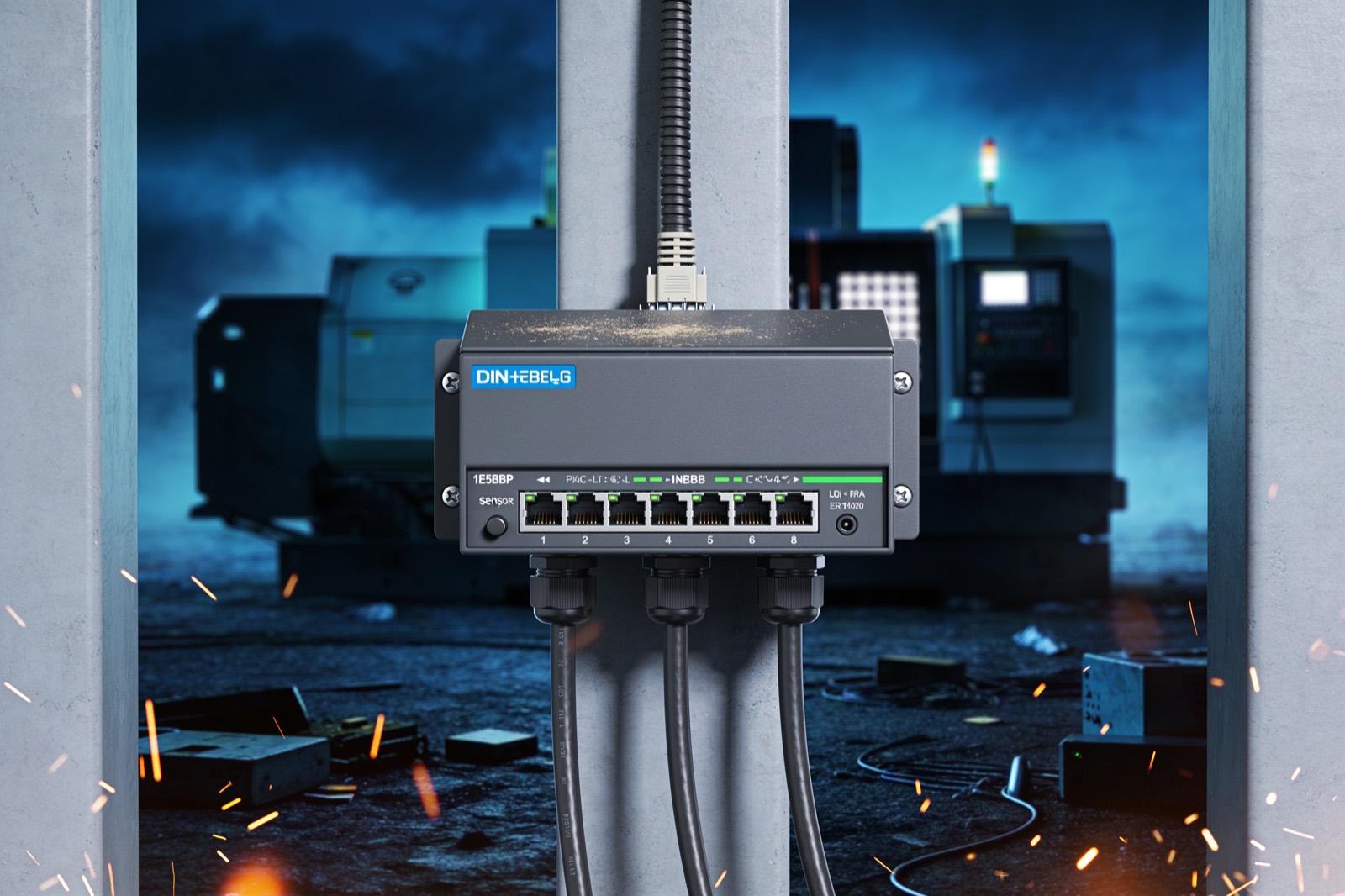 IoT & Smart Systems
How the work gets done
The same way every time: scope, build, hand over.
The hardware layer is a telemetry module wired into the machine's controls — reading the PLC or controller over Modbus, CAN, or serial — with connectivity chosen for the field, not the lab. Cellular via LTE Cat 1 or LTE-M is usually the right call because it sidesteps every customer IT department; customer-network Ethernet is the fallback where cellular cannot reach. Each unit gets a cryptographic identity provisioned during manufacturing, so a machine is trusted from the moment it powers up on-site. The backend is multi-tenant from day one: your service team sees the whole fleet, each customer sees only theirs, and remote diagnostics — live values, fault history, log retrieval — reach any unit without a site visit.
The business results are measurable: service issues resolved remotely instead of on-site, warranty claims answered with data, engineering decisions informed by real usage instead of anecdote. Fleet-wide firmware updates keep shipped machines improvable, and the same telemetry foundation supports the offerings connectivity makes possible — consumable reordering, predictive maintenance contracts, usage-based pricing.
The first units are usually a small pilot batch built on an off-the-shelf industrial telemetry module — a commercial cellular gateway with the right I/O — rather than a custom board, so the data model, backend, and provisioning flow get exercised on real machines at real customer sites. What the pilot teaches is rarely about the electronics: it is about which fault codes matter to the service team, what usage data engineering wishes it had, and how technicians want the install to go. Once those are settled and volumes justify it, a custom module that fits the machine's enclosure and cost target follows, carrying the same firmware interfaces.
The backend is built on components you own — a standard MQTT broker, a relational and time-series database, and an API your applications can call — so fleet data is not hostage to a platform subscription, and a customer portal, an ERP link, or a data science effort can all read from the same place. On the machine, the module buffers through cellular dead zones and reports its own signal quality and data usage, which keeps carrier costs predictable across the fleet. Handover covers the installation and wiring guide, the provisioning procedure, backend deployment scripts, and a service-team runbook on reading diagnostics and handling a machine that has gone silent.
Scope it in writing
What we agree before work starts
- Telemetry hardware design for new builds or retrofit kits
- Cellular or network connectivity with per-unit identity
Build with checkpoints
Working results, not slide decks
- Factory provisioning workflow for production
- Multi-tenant fleet backend with customer-scoped dashboards
Hand over something you own
Documentation, source, and training
- Remote diagnostics and log retrieval tooling
- Fleet firmware update system
Sound familiar?
Where connected equipment earns its keep.
Equipment health dashboards for an OEM service department
Automatic consumable and wear-part reorder triggers
Predictive maintenance offerings backed by fleet data
Usage data supporting leasing or per-use billing models
Ask about Connected Equipment
Describe the problem. Get a straight answer.
One line is enough. An engineer replies within a business day.
Related work
Radar centering system for steel mills
Components:
- Radar sensors (strip position): Non-contact radar reading strip edge position in a hot, dusty, vibrating environment where optical sensors fail.
- Edge controller (signal processing): Turns raw radar returns into a clean lateral offset in real time.
- Mill PLC (centering actuators): The mill's existing controller: receives the offset and drives the centering actuators.
- Operator HMI (live position): Live strip position for the operator.
Connections:
- Radar sensors to Edge controller (raw returns)
- Edge controller to Mill PLC (offset)
- Edge controller to Operator HMI
A steel-mill systems provider · Steel manufacturing
Radar-based centering system for steel mills
End-to-end engineering of a radar sensing system that measures and centers material on steel mill lines — from equipment assessment through hardware selection, electrical engineering, software, installation, and commissioning.
Read the case study →Common questions
Asked before every connected equipment project.
Our customers' IT departments will never allow this. How do you deal with that?
Cellular. A telemetry module with its own LTE connection never touches the customer's network, which turns a months-long IT negotiation into a non-event. Where cellular coverage fails, an outbound-only TLS connection over the customer network is the fallback — no inbound ports, no VPN into their plant, nothing for IT to reasonably refuse.
Who owns the data the machines generate?
That is a contractual decision you make deliberately, and the architecture should support whatever you decide. The common pattern gives customers full access to their own equipment data while the OEM uses fleet-wide data for service and product improvement. We build the tenancy and access controls to enforce the policy you choose.
Can we connect machines we've already shipped?
Usually, yes. A retrofit kit — telemetry module, cellular antenna, and a documented wiring interface to the existing controls — can be installed by field technicians during routine service visits. Retrofit constraints differ from new-build designs, so we design the kit around what is actually accessible in the installed base.
How much does cellular connectivity cost per machine, and who pays for it?
We will not quote a number here because it depends on carrier, region, and how much data each machine sends — but the design keeps it small. Telemetry is compressed and sent at rates matched to how fast values change, so a typical machine uses a small fraction of an entry-level IoT data plan. Who pays is a business decision: some OEMs bundle it into the machine price or a service contract, others bill it as a subscription. We build the backend to support either model.
What happens if the machine has no cellular coverage where it is installed?
It keeps working; only the reporting changes. The telemetry module buffers locally and uploads when coverage returns, and the machine's own controls never depend on the link. For sites with no coverage at all — basements, remote areas, shielded buildings — options include an external antenna run to a better location, a fallback to the customer's Ethernet or Wi-Fi with outbound-only connections, or in rare cases a technician-initiated sync during service visits. The install guide covers checking signal before final placement.


Where this sits
Connected Equipment, inside a iot & smart systems system.
The lit component is the part of the system this service delivers; the rest is what it has to work with.
Hover or focus a component to see what it is and what it talks to. Arrow keys move between them.
Field sensors report through an edge gateway to a broker; a time-series store feeds dashboards, and rules raise alerts that reach a person.
Components:
- Sensors (field): Temperature, vibration, level, current — wired or wireless.
- Edge gateway (DIN rail): Reads the sensors, buffers when the link is down, speaks MQTT upward.
- MQTT broker: Pub/sub hub; many gateways, many consumers.
- Time-series store: Every reading, retained for the trend and the audit.
- Rules engine (thresholds): Thresholds, rates of change, missing-heartbeat detection.
- Dashboard: Live and historical views.
- On-call phone: The alert reaches someone who can act.
Connections:
- Sensors to Edge gateway over Modbus
- Edge gateway to MQTT broker over MQTT
- MQTT broker to Time-series store over MQTT
- MQTT broker to Rules engine over MQTT
- Time-series store to Dashboard over REST
- Rules engine to On-call phone over push
Strategy. Software. Systems.
Have a system that should exist?
Tell us what your operation is doing manually, what isn't connected, or what you're trying to build. We'll tell you plainly whether and how we can help.