
Operate equipment fifty miles away like it's down the hall
Remote monitoring and control puts unmanned sites — pump stations, tanks, generators, scattered equipment — on your screen and under your command from anywhere. It removes windshield time: the drive-by checks that mostly confirm nothing is wrong, and the failures discovered a day late because nobody happened to drive by.
Willowark builds these systems security-first, because remote control done casually is a liability. No port forwarding, no equipment exposed to the internet — outbound-only connections, authenticated users with role-based permissions, and an audit log of every command.
 IoT & Smart Systems
How the work gets done
The same way every time: scope, build, hand over.
Connectivity is matched to each site: cellular with LTE-M for low-data telemetry points, LoRaWAN for battery-powered sensors spread across a large property feeding one uplink, and satellite where nothing else reaches. Telemetry flows outbound over MQTT with TLS; interactive access rides a WireGuard VPN rather than exposed ports. The alarm engine does the watching — limit and rate-of-change alarms with escalation chains through SMS, email, and voice until someone acknowledges — and heartbeat supervision means a silent site is itself an alarm, not an unnoticed gap. Control commands require authentication and confirmation, execute subject to interlocks enforced by the local controller, and land in the audit trail with user, time, and result.
The local controller always retains authority: if the link dies mid-command or goes quiet for a week, the site runs its defined fallback logic safely on its own. In production, the system is measured by truck rolls avoided, alarms that were acted on rather than silenced, and incident timelines reconstructed in minutes from the audit log.
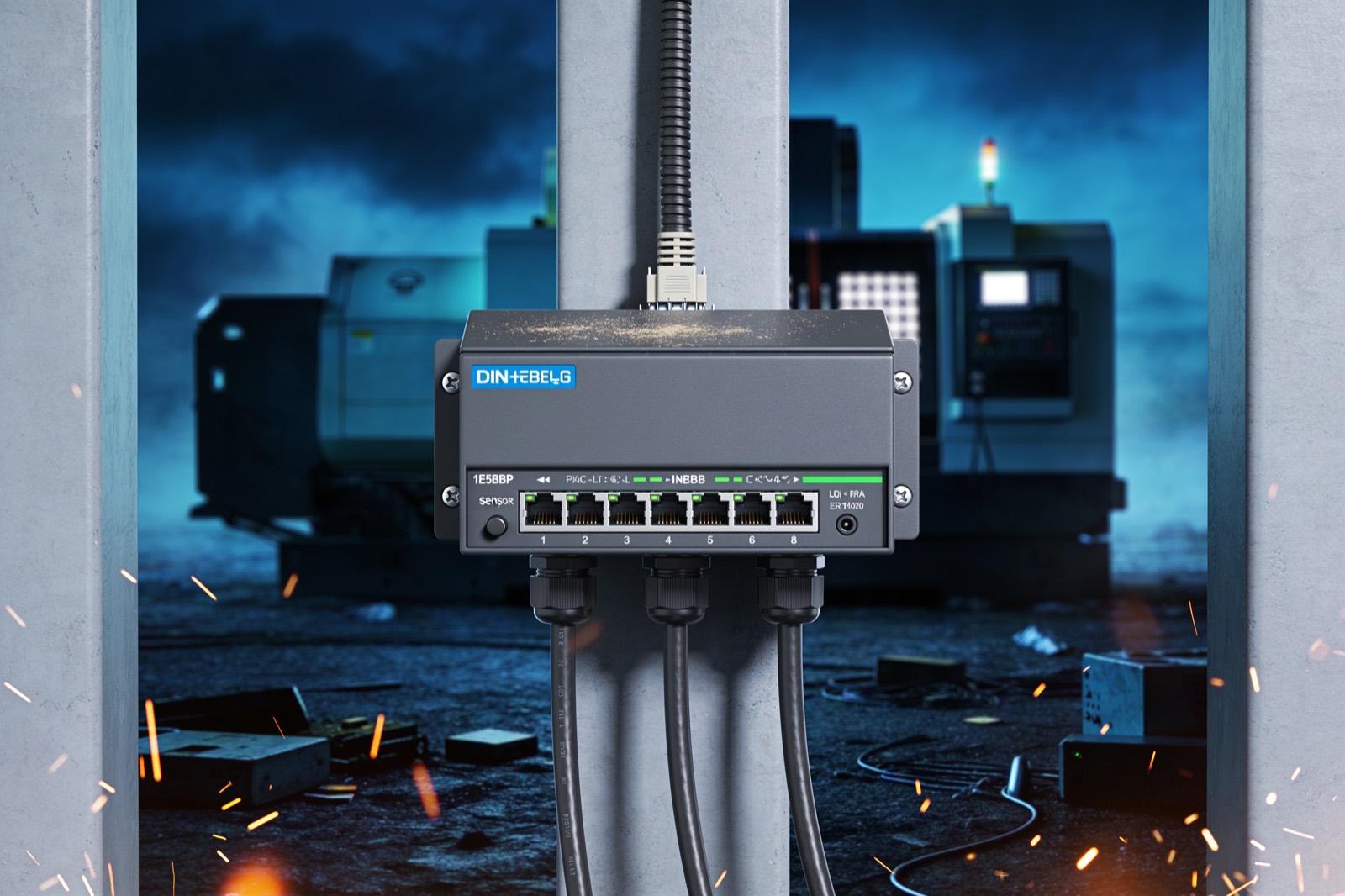
Site hardware is off-the-shelf industrial: a small PLC or RTU for local control and I/O, a cellular gateway with an external antenna, and a DIN-rail enclosure rated for the location. Power is often the design constraint at unmanned sites — a station with utility power gets a small UPS so telemetry survives a blink and reports an outage, while a remote tank or field sensor runs on solar and battery with a power budget worked out for the darkest week of the year, not the average one. The first site goes in as a pilot so alarms, connectivity, and fallback logic prove themselves before the pattern repeats across the rest.
Telemetry lands in a time-series database you own and publishes over MQTT, so a SCADA package, a reporting tool, or a delivery-scheduling system can subscribe without going through us; the alarm and audit history is stored in a standard database that can be queried and exported for regulators or insurers. Handover includes per-site documentation — wiring, addressing, antenna placement, connectivity account details — plus an alarm philosophy document explaining every alarm, its limits, and who gets it. The maintenance runbook covers the recurring realities of unmanned sites: replacing a modem, swapping a battery, re-commissioning a site after a controller replacement, and reviewing alarm statistics periodically to keep the system trusted.
Scope it in writing
What we agree before work starts
- Site survey and connectivity design: cellular, LoRaWAN, or satellite
- Telemetry hardware and local fallback control logic
Build with checkpoints
Working results, not slide decks
- Secure remote access with VPN and role-based permissions
- Alarm engine with escalation and acknowledgment tracking
Hand over something you own
Documentation, source, and training
- Remote control interface with full audit logging
- Commissioning with failure-mode testing at each site
Sound familiar?
Where remote monitoring & control earns its keep.
Pump and lift station monitoring with remote start and stop
Tank level telemetry driving delivery scheduling
Generator and backup power supervision at unmanned sites
Irrigation and water system control across dispersed properties
Ask about Remote Monitoring & Control
Describe the problem. Get a straight answer.
One line is enough. An engineer replies within a business day.
Related work
Radar centering system for steel mills
Components:
- Radar sensors (strip position): Non-contact radar reading strip edge position in a hot, dusty, vibrating environment where optical sensors fail.
- Edge controller (signal processing): Turns raw radar returns into a clean lateral offset in real time.
- Mill PLC (centering actuators): The mill's existing controller: receives the offset and drives the centering actuators.
- Operator HMI (live position): Live strip position for the operator.
Connections:
- Radar sensors to Edge controller (raw returns)
- Edge controller to Mill PLC (offset)
- Edge controller to Operator HMI
A steel-mill systems provider · Steel manufacturing
Radar-based centering system for steel mills
End-to-end engineering of a radar sensing system that measures and centers material on steel mill lines — from equipment assessment through hardware selection, electrical engineering, software, installation, and commissioning.
Read the case study →Common questions
Asked before every remote monitoring & control project.
How do you make remote control safe from intrusion?
By never exposing equipment to inbound connections: sites dial out over TLS, interactive access goes through a modern VPN like WireGuard, users authenticate individually with role-based permissions, and every command is logged. The attack surface of a well-built system is a hardened endpoint, not an open port on a PLC — which is unfortunately common.
What happens when a site loses connectivity?
The site keeps running under its local control logic, which never depends on the link for safe operation, and buffers its telemetry for backfill when the connection returns. Meanwhile the missed heartbeat raises an alarm on your end, so a communications failure gets noticed in minutes rather than at the next site visit.
How do you prevent alarm fatigue?
By treating alarm design as engineering: deadbands and delays that suppress nuisance chatter, severity levels that reserve urgency for genuine problems, and escalation chains that stop when someone acknowledges. We also review alarm statistics after commissioning — an alarm that fires daily and gets ignored is a design defect, and we fix it.
Do we need a full SCADA system for this?
Not necessarily. For a handful of sites with straightforward monitoring and a few control points, a purpose-built dashboard and alarm engine on open tooling is usually simpler, cheaper to maintain, and easier to change than a full SCADA package. Where you already run SCADA, or where regulatory reporting and operator conventions expect it, we integrate with it rather than replace it — the telemetry publishes in formats SCADA systems consume. The decision follows the size of the operation and who will be operating it.
Can operators use it from a phone?
Yes. Status, alarms, and acknowledgment work from a phone browser or a simple mobile app, because the person on call is rarely at a desk. Control actions from a phone are gated more carefully — individual login, a confirmation step, and role-based permissions that can restrict remote starts and stops to specific users or hours — and every command is logged with who sent it and when. Sites with stricter policies can limit phones to view and acknowledge only, with control reserved for the office workstation.


Where this sits
Remote Monitoring & Control, inside a iot & smart systems system.
The whole system this service belongs to. Hover or focus a component to see what it is and what it talks to.
Hover or focus a component to see what it is and what it talks to. Arrow keys move between them.
Field sensors report through an edge gateway to a broker; a time-series store feeds dashboards, and rules raise alerts that reach a person.
Components:
- Sensors (field): Temperature, vibration, level, current — wired or wireless.
- Edge gateway (DIN rail): Reads the sensors, buffers when the link is down, speaks MQTT upward.
- MQTT broker: Pub/sub hub; many gateways, many consumers.
- Time-series store: Every reading, retained for the trend and the audit.
- Rules engine (thresholds): Thresholds, rates of change, missing-heartbeat detection.
- Dashboard: Live and historical views.
- On-call phone: The alert reaches someone who can act.
Connections:
- Sensors to Edge gateway over Modbus
- Edge gateway to MQTT broker over MQTT
- MQTT broker to Time-series store over MQTT
- MQTT broker to Rules engine over MQTT
- Time-series store to Dashboard over REST
- Rules engine to On-call phone over push
Strategy. Software. Systems.
Have a system that should exist?
Tell us what your operation is doing manually, what isn't connected, or what you're trying to build. We'll tell you plainly whether and how we can help.