
Tighter routes, honest crew hours, and contracts that renew before spring
Willowark builds AI automation and custom software for landscaping and grounds maintenance companies: routing that cuts windshield time, crew hour tracking that shows which properties actually make money, renewal automation that gets contracts signed before the season starts, and snow dispatch that survives a 3 a.m. callout.
We connect to what you already use for scheduling and billing, then build the parts that keep ending up in spreadsheets: property-level profitability from real crew hours, a renewal pipeline with per-property pricing history, enhancement work captured in the field so it gets billed, and a winter tool logging every push, every ton of salt, and every timestamp.
The season sets the order of work. A first landscaping project in late winter is usually renewals, so proposals go out priced from last year's hours before the routes fill. In summer it is crew time capture, because that is when the data exists. In fall it is the snow tool, built and tested before the first callout rather than during it. Each one connects to the scheduling and billing software you already run. We do the setup on-site across the Capital Region, where we know what a snow week looks like, and remotely nationwide.
Reviewed
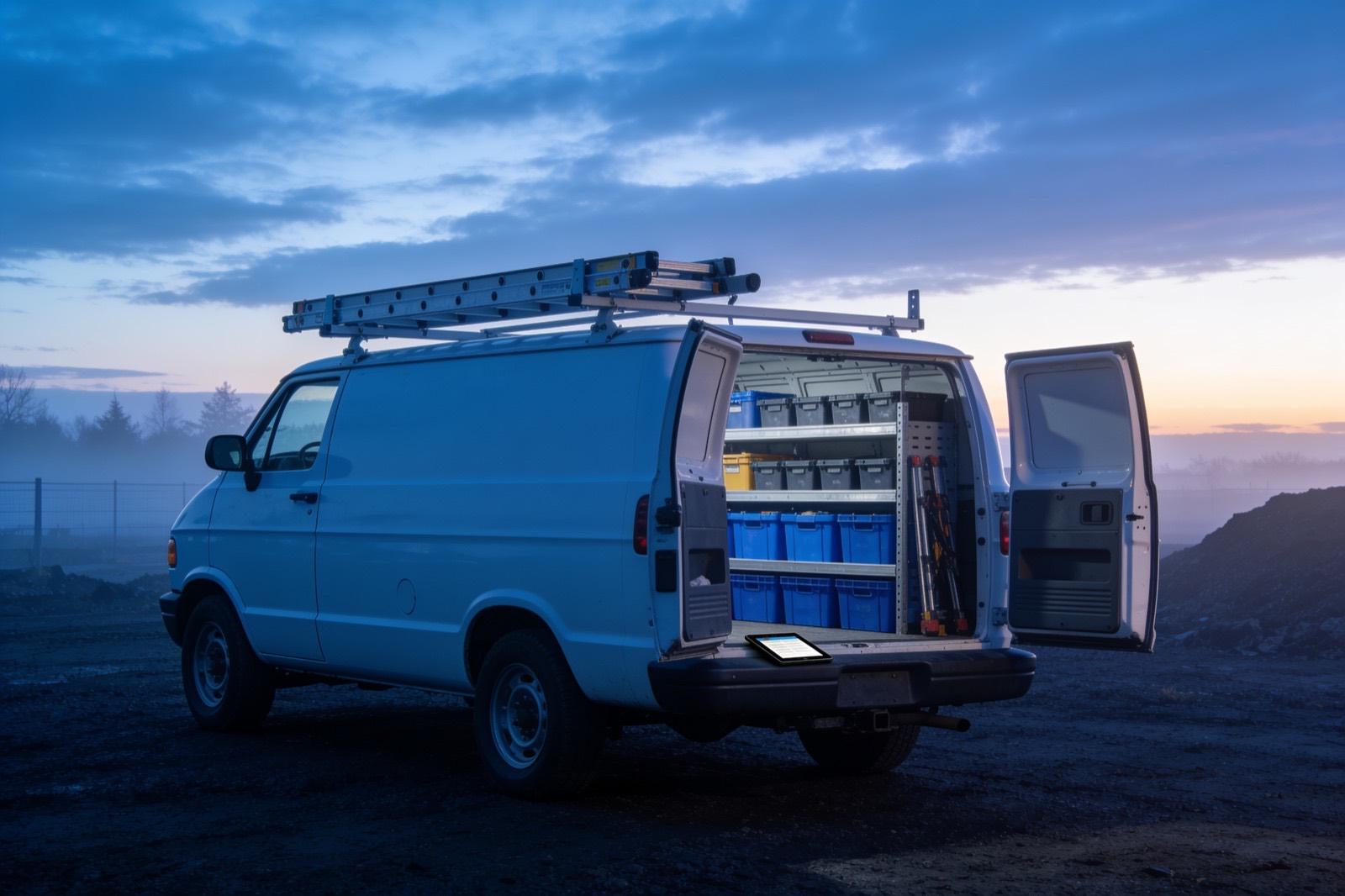
Sound familiar?
If you've said any of these, we should talk.
“Snow nights are chaos. I am texting twenty guys at two in the morning and logging salt on a clipboard.”
We build winter dispatch that sends the callout from one place and tracks acknowledgment, plus a mobile flow for each operator to log arrival, departure, material applied, and site photos. Billing and any future liability question come from the same timestamped record.
“Crew hours come in on paper and I cannot tell which properties are losing money.”
We build crew time capture with per-property allocation — clock in and out per stop on a phone, with GPS confirmation where you want it — rolled into cost per visit against contract price. Underpriced properties become obvious before renewal.
“Renewals go out late every spring and we lose accounts we could have kept.”
We automate the renewal cycle: pricing proposed from last season's actual hours and materials, proposals sent on a schedule you set, and follow-up until they are signed or declined. Non-responders get flagged while there is still time to fill the route.
“Extras get done in the field and never get billed.”
We give crew leads a two-tap way to record enhancement work — property, what was done, materials used, and a photo — that reaches the office as a billable item the same day. Recovering part of what currently walks away is the fastest payback here.
“Every spring I hire office help just to answer the phone and send estimates, and by June they are gone.”
We put an answering and quoting layer in front of the spring rush: calls and web forms captured with the address and the service wanted, standard work like cleanups and mulch priced from your rate sheet, and a site visit booked for the rest. Follow-up runs on its own until the customer answers or the route is full.
How this industry actually runs
The operation as we usually find it.
Maintenance work is a routing problem wearing a horticulture costume. Properties get visited on a cycle, weekly or every ten days in the growing season, and profit comes down to how many stops a crew of two or three completes before drive time eats the day. A poorly built route sends trucks past each other across town. Crew hours arrive on paper or in a foreman's memory, so the loss on an underpriced property hides inside a good week. Spring cleanups and irrigation startups compress into a few frantic weeks, fall leaf work and blowouts do the same, and between them sits enhancement work that is higher margin and easiest to forget to bill. Then winter inverts everything: on-call around the clock, triggered by accumulation thresholds written into contracts, billed per push or per season, and carrying liability defended with timestamps, photos, and salt records.
From the phone and the truck to the office, without re-typing
Components:
- Calls, texts, forms (customers)
- Crews in the field (photos, hours, parts)
- Automation layer (AI + rules, review)
- Quotes & invoices (drafted for approval)
- Schedule & CRM (one source of truth)
Connections:
- Calls, texts, forms to Automation layer (capture)
- Crews in the field to Automation layer
- Automation layer to Quotes & invoices
- Automation layer to Schedule & CRM
What we build
Starting projects that fit Landscaping & Grounds.
- Route optimization that raises stop density and cuts drive time across maintenance days
- Crew time capture allocated per property, rolled into cost per visit against contract price
- Seasonal contract renewal automation priced from last season's real costs
- Snow and ice callout dispatch with acknowledgment tracking and per-site service logging
- Timestamped salt, material, and photo records that hold up to a liability question later
- Field capture of enhancement and extra work so it reaches an invoice that week
- Applicator license and application record keeping for fertilizer and pesticide work
- Spring intake and quoting automation that prices standard work from your rate sheet and books site visits for the rest
Capabilities we bring
What we'd build first
Three places a first project usually starts.
01
Route optimization that raises stop density and cuts drive time across maintenance days
02
Crew time capture allocated per property, rolled into cost per visit against contract price
03
Seasonal contract renewal automation priced from last season's real costs
On-site across the Capital Region and remote nationwide — see where we work.
Working in Landscaping & Grounds?
Tell us the line.
What runs by hand, what is not connected, what you are trying to build. An engineer replies within one business day with whether and how we would approach it.

Common questions
What Landscaping & Grounds teams ask first.
How much can routing software realistically save us?
It depends how dense your book already is. Companies with clustered accounts see modest gains; companies that grew by taking every call regardless of location often find crews spending an hour a day driving between stops that could be sequenced better. We start from your actual property list.
Can you handle both the growing season and snow operations in one system?
Yes, and it is worth doing because the customers, properties, and often the crews overlap. Maintenance runs on a route cycle; snow runs on accumulation thresholds and on-call dispatch and needs far more documentation per visit. We build one property database with two views.
Our crews are not office people. Will they actually use a new tool?
Only if it is faster than doing nothing, which is the design constraint we work under. Crew-facing tools should be a few large buttons, work with gloves on and no signal, and never ask for anything the office can infer. If a foreman needs more than one demonstration, we rebuild it.
We pay some crews hourly and some by the job. Can you handle both?
Yes. The time capture is the same either way — clock in and out per property from a phone — and what changes is how it rolls up. Hourly crews feed payroll hours by job; piece-rate crews feed a pay sheet by property or by task that both sides can see. Keeping both on one record means the per-property cost is real regardless of how the crew is paid, which is usually the number owners were missing.
Can the snow tool prove we serviced a site if a slip-and-fall claim comes in?
It can produce the record, which is typically what the claim turns on: when the operator arrived and left, what was applied and how much, the weather at the time, and photos of the lot when they pulled out. We store that per site and per event, exportable as a single report for the account or your insurer. We are not lawyers and cannot say what a court will accept, but a timestamped record beats a memory of that night.
More in Local Service Businesses
Strategy. Software. Systems.
Engineering for Landscaping & Grounds.
Describe the problem in your own words. An engineer reads it — not a sales script — and tells you plainly what it would take.