
Your 1995 machine still runs great — now it can report to your 2026 software
Legacy equipment connectivity gets data out of machines built before networking was assumed — controllers with only RS-232 ports, drives on obsolete fieldbuses, machines with no data interface at all — and into the modern systems that need it. It removes the worst justification for a capital request: replacing a mechanically sound machine purely because it cannot report what it is doing.
Willowark's rule for this work is read-only first, non-invasive wherever possible. We start with what the machine already emits — a serial port that prints cycle reports, a PLC with an unused comms card slot, status lamps and relay contacts that can be sensed without touching control logic. Production keeps running while we listen; nothing in the machine's behavior changes until everyone understands exactly what would.
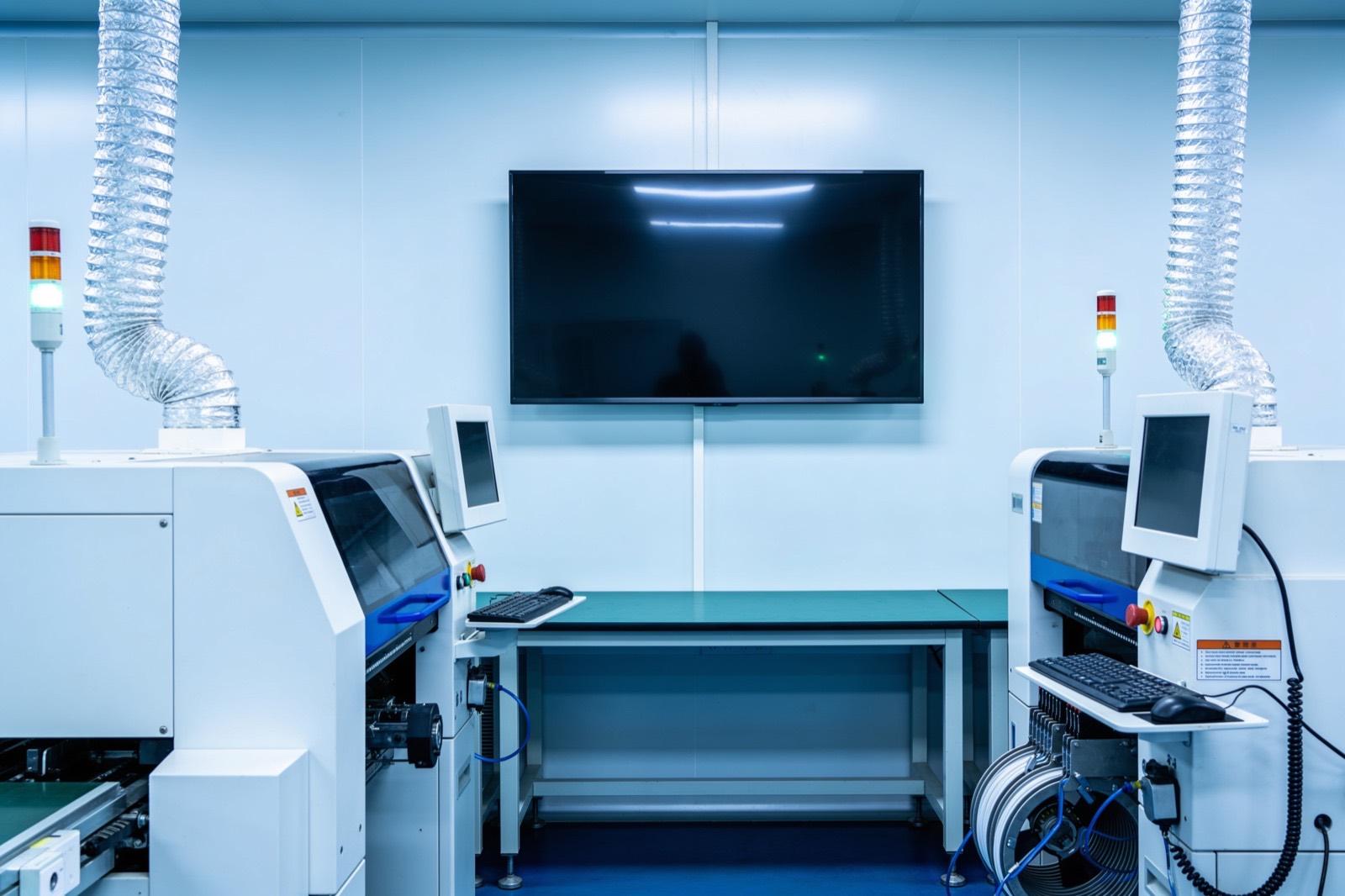 Systems Integration
How the work gets done
The same way every time: scope, build, hand over.
The toolkit is broad because old machines are diverse: RS-232 and RS-485 capture with protocol analysis when documentation is gone, Modbus RTU polling of drives and meters, serial-to-Ethernet converters with correct handshaking and timing, and communication modules for legacy PLC families that never left service. Where no data interface exists at all, we instrument from the outside — current transformers on the main feed, retrofit sensors, optical or contact-based cycle counting — inferring machine state without modifying a certified control system. Signal quality matters at this layer: isolation, grounding, and termination decide whether the data can be trusted.
The output lands wherever your modern stack expects it: an MQTT namespace, a historian, a SQL database, a dashboard. Success looks like a 30-year-old machine appearing in the same OEE report as the new cell, with data your scheduler trusts — and the retrofit typically costing a small fraction of replacement, on downtime measured in hours.
The survey comes first and covers every candidate machine: what ports and interfaces exist, what they emit, what documentation survives, and who on your maintenance staff knows the machine best. From that we produce an integration map with a per-machine approach — passive serial capture here, a comms module there, external sensing where nothing else works — and a named owner for each connection. Where an original vendor still exists and is protective, we work only at the interfaces they document and stay out of control logic, so any support relationship is preserved and responsibility for the machine's behavior stays where it was.
Each retrofit is tested against the machine itself. Captured serial output is decoded and checked against what the operator saw on the panel; external sensors are validated by counting cycles by hand for a while and comparing; polled registers are confirmed against known states. Machines come online in phases, usually starting with the one whose data matters most and whose downtime hurts least, and the collected data runs beside existing manual logs until both agree. Every retrofit can be removed by unplugging it, which is the rollback plan. Documentation records each connection, its wiring, its decoding rules, and who owns the machine.
Scope it in writing
What we agree before work starts
- Equipment connectivity survey with per-machine approach and options
- Retrofit hardware installation: converters, comm modules, or external sensors
Build with checkpoints
Working results, not slide decks
- Data acquisition software normalizing legacy output into your standard namespace
- Signal and data validation against observed machine behavior
Hand over something you own
Documentation, source, and training
- Documentation covering wiring, protocols, and every assumption made
- Phased retrofit schedule with per-machine validation against manual logs and removal procedures
Sound familiar?
Where legacy equipment connectivity earns its keep.
A 1990s CNC with no network port that the scheduler needs cycle data from
A press line whose only output is a serial ticket printer nobody reads
A legacy PLC family with an empty comms slot and a plant that wants its tags in the historian
A machine with no controller access at all, where power draw and a cycle sensor can tell the story
Ask about Legacy Equipment Connectivity
Describe the problem. Get a straight answer.
One line is enough. An engineer replies within a business day.
Related work
Radar centering system for steel mills
Components:
- Radar sensors (strip position): Non-contact radar reading strip edge position in a hot, dusty, vibrating environment where optical sensors fail.
- Edge controller (signal processing): Turns raw radar returns into a clean lateral offset in real time.
- Mill PLC (centering actuators): The mill's existing controller: receives the offset and drives the centering actuators.
- Operator HMI (live position): Live strip position for the operator.
Connections:
- Radar sensors to Edge controller (raw returns)
- Edge controller to Mill PLC (offset)
- Edge controller to Operator HMI
A steel-mill systems provider · Steel manufacturing
Radar-based centering system for steel mills
End-to-end engineering of a radar sensing system that measures and centers material on steel mill lines — from equipment assessment through hardware selection, electrical engineering, software, installation, and commissioning.
Read the case study →Common questions
Asked before every legacy equipment connectivity project.
Will connecting old equipment risk breaking it?
Our default methods are chosen so the answer is no: passive serial listening, reading from spare comms interfaces, and external sensing do not alter control logic or timing. Anything more invasive is proposed explicitly, reviewed with your maintenance team, and scheduled for planned downtime with a rollback plan.
The manuals and the engineer who knew this machine are long gone. Is that fatal?
Rarely. Serial traffic can be captured and decoded, legacy PLC programs can usually be uploaded and read, and machine behavior itself is documentation if you observe it carefully. We scope a short discovery phase first so you get an honest assessment of difficulty before committing to the retrofit.
Is retrofitting worth it versus just replacing the machine?
If the machine still meets its process requirements, connectivity alone almost never justifies replacement — a retrofit typically costs a small fraction of a new machine and keeps a known-good asset in service. If replacement is on the horizon anyway for process reasons, we will say so, and design the data layer so the new machine drops into it.
How much downtime will the retrofit require?
For most approaches, very little. Passive serial capture and external sensing are installed without stopping the machine, and adding a converter to an existing port is usually a matter of minutes. Fitting a comms module to a legacy PLC or touching wiring inside a panel requires a planned stop, which we schedule with your maintenance team and keep short by bench-preparing everything beforehand. The survey tells you which category each machine falls into before anything is scheduled.
Can the retrofitted data be trusted for scheduling and OEE, or is it only indicative?
That depends on the method, and we are clear about it for each machine. Direct reads from a controller or decoded cycle reports are typically as trustworthy as any modern machine's data. Inferred data — state from power draw, counts from an external sensor — is validated against manual observation before it is relied on, and its confidence is documented so downstream systems know what they are consuming. Where inference is not good enough for a decision, we say so and look for a better signal.

Where this sits
Legacy Equipment Connectivity, inside a systems integration system.
The lit component is the part of the system this service delivers; the rest is what it has to work with.
Hover or focus a component to see what it is and what it talks to. Arrow keys move between them.
A legacy machine, an ERP, a vision cell and a quality database are joined by an integration layer so the data exists once and the people who need it see it.
Components:
- Legacy machine (serial): A 1998 controller with an RS-232 port and no documentation.
- ERP: Orders, inventory, costing.
- Vision cell: Inspection results per part.
- Integration layer (the seam): Translates, validates, and stores once. This is the work.
- Unified data: One record per part, per order, per event.
- People (dashboards, alerts): Production, quality and the office see the same numbers.
Connections:
- Legacy machine to Integration layer over serial
- ERP to Integration layer over REST, both directions
- Vision cell to Integration layer over REST
- Integration layer to Unified data over SQL
- Unified data to People over REST
Strategy. Software. Systems.
Have a system that should exist?
Tell us what your operation is doing manually, what isn't connected, or what you're trying to build. We'll tell you plainly whether and how we can help.