
Compute where the latency lives, store where the scale lives
Edge-to-cloud systems split computing between hardware near your equipment and infrastructure in the cloud, putting each job where it physically belongs. They remove a false choice: cloud-only architectures that fall over when the internet hiccups or the round trip is too slow, and on-premises-only systems that can never aggregate across sites or scale their analytics.
Willowark designs the split deliberately. Anything with a deadline — vision inference, control decisions, safety-adjacent logic, data reduction — runs at the edge. Anything that benefits from elasticity — long-term storage, fleet-wide analytics, model training, dashboards for people not standing on the plant floor — runs in the cloud. The connection between them is engineered to fail gracefully, because it will fail.
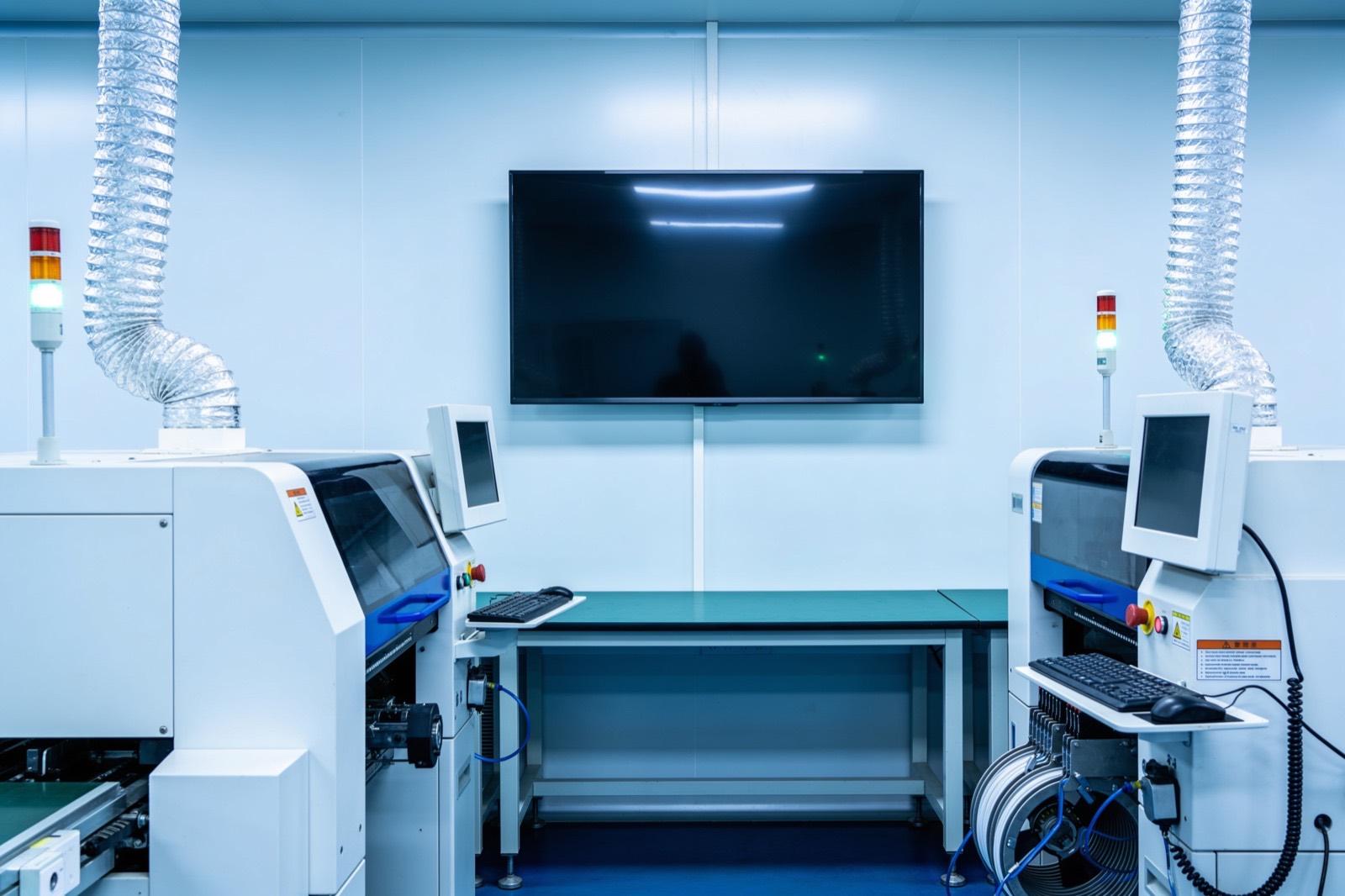 Systems Integration
How the work gets done
The same way every time: scope, build, hand over.
On the edge side we deploy industrial PCs or SBC-class hardware running containerized workloads, so the software stack is reproducible and updatable rather than a hand-configured box nobody dares reboot. Typical edge duties include ML inference near the sensor, protocol translation, local buffering, and downsampling high-rate data before it crosses the WAN. The link upward is usually MQTT or gRPC over TLS with backpressure handling, and fleet management — remote deployment, health monitoring, staged rollouts — is designed in from the start, because version fifteen of your edge software is a certainty.
In production, the test is what happens during a WAN outage: the edge keeps operating, buffers what matters, and reconciles when the link returns, and nobody near the machine notices. We measure success in inference latency at the edge, data completeness in the cloud, and how long it takes to roll an update to fifty sites — which should be an afternoon, not a road trip.
Design starts with a workload inventory rather than a hardware catalog. For each function — inference, protocol translation, buffering, aggregation, dashboards — we record its latency requirement, its data volume, and what must keep working when the link is down, then place it at the edge or in the cloud on that evidence. The resulting integration map shows every data path, the interface at each boundary, and who owns the components on either side. Where equipment or software vendors keep their side closed, we integrate at the interfaces they document and treat their component as a black box with a defined contract.
Each boundary gets its own test before the system does: the edge stack is proven on the bench with the cloud unreachable, the transport is exercised with the link cut, throttled, and restored, and the cloud side is loaded with replayed edge data at realistic rates. Rollout is phased — one site first, watched for long enough to trust it, then the rest in waves through the fleet tooling, with rollback to the previous image at any point. Documentation records every connection, its transport, its certificate, and the named owner for the edge hardware, the network, and the cloud account.
Scope it in writing
What we agree before work starts
- Edge hardware specification and containerized software stack
- Workload placement architecture documenting what runs where and why
Build with checkpoints
Working results, not slide decks
- Resilient edge-to-cloud transport with buffering and reconciliation
- Fleet deployment and monitoring tooling for remote updates
Hand over something you own
Documentation, source, and training
- Cloud-side storage, processing, and dashboard infrastructure
- Phased site rollout plan with outage testing and image rollback procedures
Sound familiar?
Where edge-to-cloud systems earns its keep.
A vision inspection system that must reject parts in 80 milliseconds but report yield trends fleet-wide
A machine builder shipping units to customer sites with unreliable or restricted internet
A multi-site manufacturer that wants one analytics platform fed by every plant
High-frequency vibration monitoring where raw data is too heavy to ship to the cloud unprocessed
Ask about Edge-to-Cloud Systems
Describe the problem. Get a straight answer.
One line is enough. An engineer replies within a business day.
Related work
Radar centering system for steel mills
Components:
- Radar sensors (strip position): Non-contact radar reading strip edge position in a hot, dusty, vibrating environment where optical sensors fail.
- Edge controller (signal processing): Turns raw radar returns into a clean lateral offset in real time.
- Mill PLC (centering actuators): The mill's existing controller: receives the offset and drives the centering actuators.
- Operator HMI (live position): Live strip position for the operator.
Connections:
- Radar sensors to Edge controller (raw returns)
- Edge controller to Mill PLC (offset)
- Edge controller to Operator HMI
A steel-mill systems provider · Steel manufacturing
Radar-based centering system for steel mills
End-to-end engineering of a radar sensing system that measures and centers material on steel mill lines — from equipment assessment through hardware selection, electrical engineering, software, installation, and commissioning.
Read the case study →Common questions
Asked before every edge-to-cloud systems project.
How do we update software running at the edge across many sites?
That is a first-class design requirement, not an afterthought. We use container-based deployments with a fleet management layer, staged rollouts so a bad release hits one site before it hits fifty, and automatic rollback on failed health checks. Updates become routine operations your team performs from a dashboard.
What edge hardware do you recommend?
It depends on the workload: fanless industrial PCs for general duty, GPU-equipped units where vision or ML inference needs them, DIN-rail gateways for lighter protocol work. We spec for the environment — temperature, vibration, power quality — and for roughly twice the compute you need today, because edge workloads only ever grow.
Is an edge-to-cloud architecture overkill for a single site?
Sometimes, and we will say so when it is. If your latency needs are soft and your connectivity is solid, a simpler machine-to-cloud pipeline may be the better project. Edge computing earns its complexity when there are hard deadlines, heavy local data rates, unreliable links, or a fleet to manage.
What happens to the edge devices if our cloud provider or account changes?
The edge should not care, and we design it so it does not. Edge software publishes over standard transports — MQTT, gRPC — to endpoints defined in configuration, and the cloud-side ingestion is kept thin so it can be rebuilt on another platform. A provider change typically means new endpoints and certificates pushed through the fleet tooling, not a site visit. We keep vendor-specific edge agents to a minimum for exactly this reason.
How is security handled on devices sitting in places we do not control?
We assume the device can be physically reached by someone we did not intend. Disks are encrypted, credentials are per-device certificates rather than shared secrets, connections are outbound-only over TLS, and a compromised device can be revoked centrally without affecting the rest of the fleet. The edge exposes no management ports to its local network unless there is a documented reason. Where your policies or a customer's require more, we design to those requirements and write down what each control covers.

Where this sits
Edge-to-Cloud Systems, inside a systems integration system.
The whole system this service belongs to. Hover or focus a component to see what it is and what it talks to.
Hover or focus a component to see what it is and what it talks to. Arrow keys move between them.
A legacy machine, an ERP, a vision cell and a quality database are joined by an integration layer so the data exists once and the people who need it see it.
Components:
- Legacy machine (serial): A 1998 controller with an RS-232 port and no documentation.
- ERP: Orders, inventory, costing.
- Vision cell: Inspection results per part.
- Integration layer (the seam): Translates, validates, and stores once. This is the work.
- Unified data: One record per part, per order, per event.
- People (dashboards, alerts): Production, quality and the office see the same numbers.
Connections:
- Legacy machine to Integration layer over serial
- ERP to Integration layer over REST, both directions
- Vision cell to Integration layer over REST
- Integration layer to Unified data over SQL
- Unified data to People over REST
Strategy. Software. Systems.
Have a system that should exist?
Tell us what your operation is doing manually, what isn't connected, or what you're trying to build. We'll tell you plainly whether and how we can help.